
Child Safety Trends 2026: The Data Behind Baby Proofing Innovations

Every year, the baby proofing aisle gets a little smarter. The products get sleeker, the certifications get more specific, and the marketing gets louder. But the underlying question for parents hasn’t changed: what keeps a child safer, and what’s just a gadget with good packaging?
The honest answer is that both things can be true at once. The data behind pediatric injuries is sobering enough to take seriously, and the new generation of safety products is better engineered than what was available five years ago. The challenge is knowing which innovations solve real problems and which ones give parents a false sense of coverage.
Here’s where the field stands heading into 2026.
Furniture Tip-Overs: Better Hardware, Same Urgency
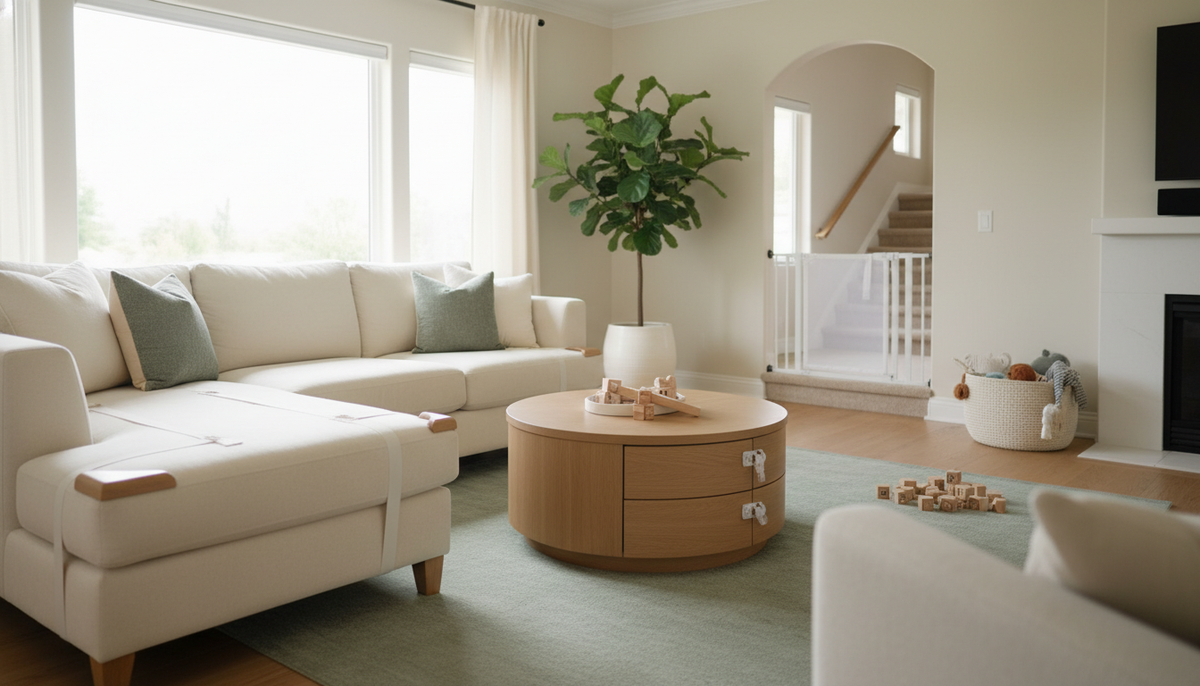
The tip-over problem hasn’t gone away. CPSC reports one child death every two weeks from furniture, TV, or appliance tip-overs. That cadence has driven meaningful changes from manufacturers, who are now designing dressers with lower centers of gravity, wider bases, and anti-tip hardware included in the box rather than sold separately.
The anchoring hardware itself has improved. Brackets are wider, wall-plate tolerances are tighter, and more products now ship with multiple anchor points rather than one. Dressers and other clothing storage units made since September 2023 must meet a mandatory federal stability standard (16 CFR 1261, required by the STURDY Act). Bookcases, TV stands, and older dressers are not covered by that rule, and the CPSC still advises anchoring every dresser, bookcase, and TV to the wall, new or old.
What hasn’t changed is the installation gap. I’ve watched neighbors leave the anti-tip strap coiled in the hardware bag for months because they weren’t sure how to find a stud. The product innovation only matters if it gets installed. If you’re buying new nursery furniture in 2026, look for pieces that include pre-drilled anchor points and straps rated to hold well beyond the weight of the piece itself.
Smart Home Integration: Real Alerts, Real Limits
WiFi-enabled door locks, motion sensors, and smart cabinet latches have moved from novelty to mainstream. The appeal is obvious: a push notification when a toddler opens the under-sink cabinet is more responsive than any passive lock. And for parents managing larger homes or children who move fast, layered awareness helps.
But CPSC guidance is consistent on this point. Technology supplements physical barriers. It does not replace them. A motion sensor on the basement stairs tells you a child is approaching. A gate certified to ASTM F1004 stops them. Both are better than either alone.
My younger daughter once emptied the cabinet under the kitchen sink in the time it took me to answer the doorbell. We had a sensor. We did not yet have a latch. The sensor logged the event beautifully. The cleaning products were on the floor. The sequence matters: physical barrier first, alert layer second.
For parents evaluating smart locks and sensors, the practical checklist is short. Does the device fail safe when the WiFi drops? Does it require a battery that will die at an inconvenient moment? Does it integrate with your existing system or require a separate app? These aren’t dealbreakers, but they’re the questions that separate useful tools from ones that get disabled after a week.
Wearable Trackers: More Sensors, Same Supervision Gap
Toddler wearables have expanded well beyond GPS. Current devices track falls, ambient temperature, and in some cases heart rate variability. For families with children who wander or have medical conditions that warrant monitoring, these tools offer real value.
The limitations are worth stating plainly. No wearable replaces active supervision. Devices need charging, and a dead battery at naptime is a gap in coverage. GPS accuracy degrades indoors and in dense environments. Fall detection generates false positives. And the notification lag, even on fast networks, means a parent is always responding after the fact rather than preventing.
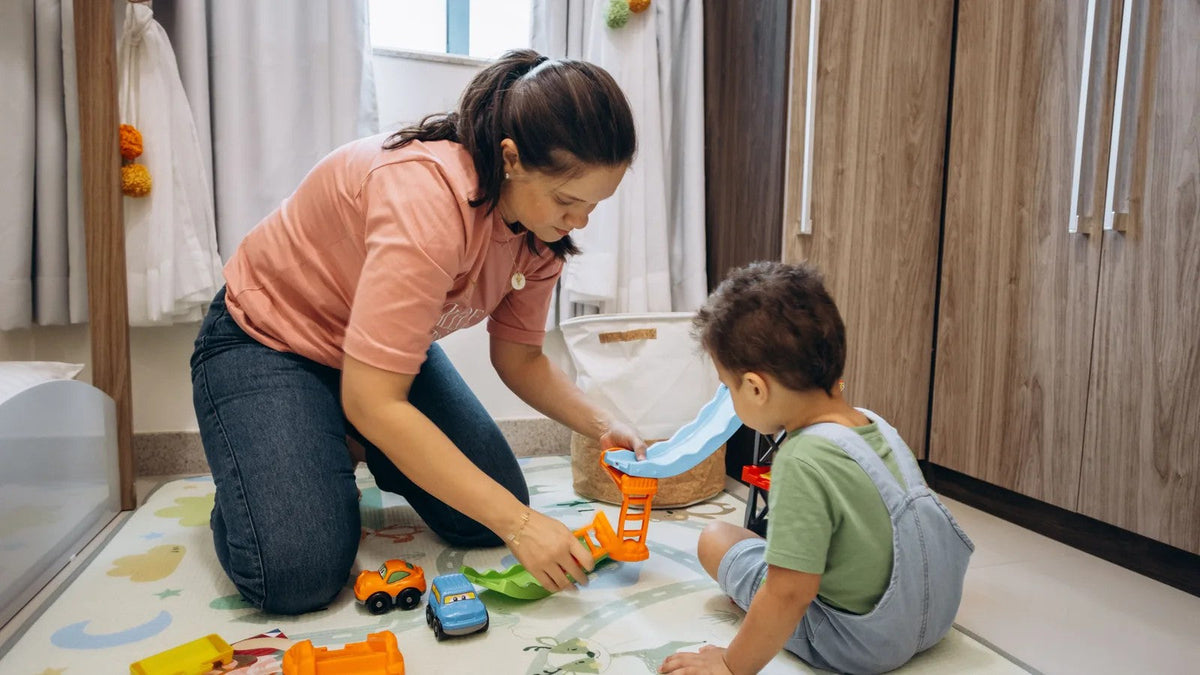
Used as one layer in a broader supervision strategy, wearables are a reasonable investment for some families. Used as a substitute for eyes-on attention, they create risk. The honest framing is that they’re a backup, not a primary safety system.


Window Covering Safety: A Solved Problem That Still Kills Children
Cord strangulation from window blinds and shades is one of the more preventable hazards in a child’s environment. Cordless designs have been available for years. Motorized options have dropped in price. CPSC recommends cordless or inaccessible-cord systems in all spaces where children are present.
The problem is that older corded blinds are still in millions of homes, and parents often don’t think of window coverings as a safety item. When I moved into our current house, every window had corded mini-blinds. Replacing them was a three-weekend project that I kept deprioritizing until my older daughter, at about 22 months, walked over to a cord and put it around her neck while I was in the same room. She wasn’t in danger. But I finished the project that weekend.
The 2026 product landscape offers good options at every price point. Cordless cellular shades are available at major retailers for under $20 per window. Motorized options from brands like Lutron and IKEA’s Fyrtur line have come down significantly. If you’re renting and can’t replace the blinds, cord wind-ups and tension devices that keep cords taut and out of reach are a reasonable interim measure.
Choking Hazard Labeling: Better Information, Unchanged Biology
Labeling on toys and food products has improved. Age-range guidance is more standardized, small-parts warnings are more prominent, and some manufacturers have adopted the ASTM small-parts cylinder test as a visible consumer reference. That’s progress.
But the data on choking injuries is a useful anchor. From 2001 to 2016, there were 305,814 nonfatal choking injuries and 2,347 choking deaths among U.S. children and teens ages 0–19, with children under five accounting for about three-quarters of fatalities (per a Pediatrics study analyzing CDC data). Better labels help parents make decisions at the point of purchase. They don’t change what happens when a three-year-old finds a toy belonging to an older sibling.
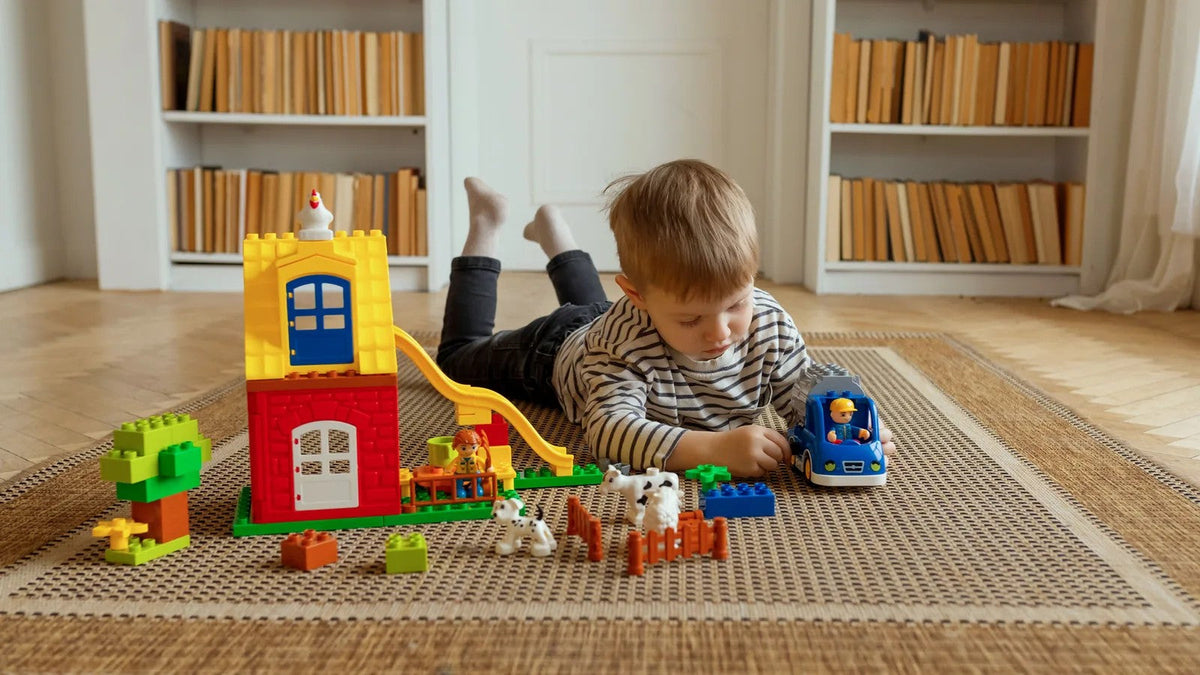
The practical implication is supervision during mealtimes and play, consistent storage of small-parts toys out of reach of younger children, and knowing infant and toddler CPR. No label captures every individual child’s developmental stage.
Poison Control Goes Digital
The national Poison Control hotline (1-800-222-1222) remains the fastest route to expert guidance after an ingestion incident. What’s changed is the digital layer around it. The America’s Poison Centers website now includes a chat function and exposure documentation tools that let parents record what was ingested, approximate quantity, and timing in a format that can be shared directly with emergency medical staff.
The scale of the problem justifies the investment in these tools. In 2024, 99.2% of poison center cases involving children under 6 were accidental (America’s Poison Centers). Approximately 3 million U.S. poisoning exposures occur annually, with young children disproportionately represented (AAP).
Smart lock boxes for medication storage are a newer product category worth watching. The better ones log access attempts, require a PIN or biometric to open, and alert a parent’s phone when accessed. For families managing multiple medications or with children who are particularly persistent, they add a meaningful layer beyond a standard childproof cap. Under 16 CFR 1700.15, packaging passes the "child-resistant" bar if at least 85% of tested children ages 42–51 months can’t open it within 10 minutes, or 80% after an adult demonstrates how. That means roughly 15–20% of children in that age range can get in. A locked box closes that gap.
Bathroom Safety: Anti-Scald Technology Comes Standard
Anti-scald mixing valves have been available for decades, but they’re now appearing as standard features in new construction and as retrofit products for existing faucets. The AAP recommends maintaining water heater temperatures below 120°F (49°C) in homes with young children. At that temperature, a serious burn takes several minutes of exposure. At 140°F (60°C), it takes about five seconds.
The newer generation of adjustable faucet aerators and thermostatic mixing valves lets parents set a hard temperature ceiling at the fixture itself, independent of the water heater setting. For renters who can’t adjust the water heater, these fixture-level products are a practical solution. They’re typically under $30 and install without tools.
Bath seats and bath rings are a separate issue. They’re not safety devices. The AAP is explicit that bath seats do not prevent drowning and should never be used as a substitute for within-arm’s-reach supervision.
Stair Safety: Gates Still Win
Retractable barriers and sensor-based stair alerts are interesting additions to the category. Retractable gates in particular solve a real problem: hardware-mounted gates on frequently used staircases create tripping hazards for adults when open, and some families disengage them because of the inconvenience. A retractable gate that retracts fully out of the walking path removes that friction.
Sensor alerts that notify parents when a child approaches stairs are useful as a secondary layer. As a primary barrier, they’re not adequate. About 93,000 children under 5 are treated in U.S. emergency rooms each year for stair-related injuries (Nationwide Children’s Hospital analysis of CPSC NEISS data from 1999–2008). Physical barriers remain the gold standard.
For top-of-stair applications, hardware-mounted gates are non-negotiable. Pressure-mounted gates belong at the bottom of stairs only. ASTM F1004 is the federal safety standard for expansion gates and expandable enclosures, made mandatory under 16 CFR Part 1239 in 2021. When you’re buying a gate, look for that certification on the packaging.
Non-Toxic Nursery Materials: Verify, Don’t Trust
Parent demand for low-VOC, flame-retardant-free nursery products has driven real market change. Crib mattresses, changing pads, and nursery furniture are increasingly manufactured without halogenated flame retardants, and many brands have moved to plant-based or wool-based fire barriers instead.
The problem is that "non-toxic" and "natural" are marketing terms, not regulatory categories. A mattress can claim to be chemical-free while still off-gassing from adhesives or foam binders. Third-party certifications are the only reliable signal. Greenguard Gold (UL Environment) tests for over 360 chemicals and VOCs. GOTS (Global Organic Textile Standard) and GOLS (Global Organic Latex Standard) verify organic content in textiles and latex, respectively. OEKO-TEX Standard 100 tests finished textiles for harmful substances.
When I was setting up my younger daughter’s nursery, I spent more time verifying certifications than I did picking the color of the walls. A brand’s "clean sleep" landing page is not a certification. Look for the certification number, which should be searchable on the certifying body’s website.
Air Quality Monitoring: Useful Data, Basic Solutions
Nursery air quality monitors that track particulates (PM2.5), CO2, humidity, and VOCs have become affordable and reasonably accurate. For parents in urban environments, near wildfire smoke corridors, or in older homes with ventilation concerns, real-time air quality data is useful.
CO poisoning kills more than 400 people each year and sends more than 100,000 to U.S. emergency rooms (CDC). A dedicated CO detector remains mandatory, and air quality monitors are not a substitute. But a device that shows humidity climbing above 60% (the range where dust mites and mold thrive) or CO2 rising above 1,000 ppm (a signal of poor ventilation during sleep) gives parents actionable information.
The most cost-effective air quality interventions remain basic: open windows when outdoor air quality permits, run an exhaust fan during and after baths, vacuum with a HEPA filter, and keep stuffed animals and fabric items washed. A $150 monitor is useful. It’s less useful than a $30 HEPA vacuum filter and consistent cleaning habits.
Modular Furniture: Fewer Products, Simpler Safety
Convertible cribs that become toddler beds, then full beds, have been around for years. What’s newer is the modular approach extending to storage, changing tables, and seating. The safety benefit is underappreciated: fewer product transitions mean fewer opportunities to misconfigure a piece for the wrong developmental stage.
A crib that converts to a toddler bed with a manufacturer-supplied conversion kit is safer than a parent improvising a transition with a different brand’s rail. The hardware is matched. The weight ratings are documented. The instructions were written for the specific combination. When my older daughter moved out of her crib, we used the conversion kit that came with it, and the process took about 20 minutes. When friends tried to adapt a different brand’s toddler rail to their crib, the fit was wrong and they ended up buying a separate toddler bed anyway.
The cost argument for modular furniture is real. One piece that serves three developmental stages is cheaper than three separate pieces, and it generates less waste. But the safety argument is equally strong: continuity of hardware means continuity of tested configurations.
The Throughline
The best products in 2026 are better than their predecessors. Hardware is stronger, certifications are more rigorous, and smart features add real value when layered over physical barriers rather than replacing them. The injury-related death rate for children ages 1–4 fell from 11.4 per 100,000 in 2011 to 9.5 in 2019 (CDC National Vital Statistics System), reflecting decades of product safety work and parent education.
The work isn’t finished. Tip-overs still kill children every two weeks. Choking injuries still disproportionately affect children under five. Cordless blinds still aren’t universal. The gap between what’s available and what’s installed in most homes remains the central challenge in child safety, and no innovation closes it without a parent who puts it in place.